
Cuts, scrapes, skin tears happen to everyone. A child falls off a bike, a gardener catches a thorn, an older relative bumps an arm on a door frame. Most of these injuries are minor, yet they all follow the same path the skin must close, rebuild and strengthen. The products and habits you choose along the way make a difference. This article explains how to choose and use a skin healing cream sensibly, what separates cuts from scrapes and skin tears and how to recognise when home care is not enough. Everything here is general information, so always follow the advice of your own healthcare professional.
Key facts
The skin has three main layers, epidermis, dermis hypodermis.
A graze (abrasion) removes the top layers and often oozes; a cut (laceration) slices through; a skin tear separates layers of fragile skin.
Keeping a minor wound clean and lightly moist supports faster surface healing than leaving it dry.
Older adults and people on certain long term medicines are more prone to skin tears.
Cuts, Scrapes Skin Tears What Is the Difference?
The three injuries look similar from a distance, but they behave differently.
Cuts (lacerations) have clean or jagged edges and can bleed heavily, even when shallow. Deeper cuts may need stitches, glue, or strips.
Scrapes (abrasions) happen when friction removes the top layer of skin. They usually ooze clear fluid and sting. Dirt often becomes embedded, so careful cleaning matters.
Skin tears occur when shear or friction separates the epidermis from the dermis, often leaving a flap. They are most common on the forearms, hands of older adults, because aging skin becomes thinner and loses elasticity. Knowing which one you have helps you decide what to do next when a professional should be involved.
Why the Skin Needs Help to Heal
The skin heals itself, so why use a product at all? Because the conditions around a wound strongly influence how well and how fast that healing happens. Dry air, friction from clothing, dirt repeatedly picking all slow the process. A topical product can help in three practical ways, it can keep the area lightly moist, it can form a gentle protective layer and it can make the skin more comfortable. A suitable cream for healing wounds is therefore best seen as an environment helper, not a magic fix.
The Right First Aid Before Any Cream
Cream goes on after proper cleaning, never before. Here is the sequence.
Wash your hands.
Apply gentle pressure with clean gauze to control bleeding.
Rinse the wound under clean running water for a few minutes.
Remove visible dirt with clean tweezers if needed, see a professional if debris will not come out.
Pat the surrounding skin dry.
Apply a thin layer of your chosen cream.
Cover with a nonstick dressing where friction or dirt is likely.
Skipping the cleaning step is the most common error. Applying cream over dirt can trap bacteria in the wound.
What to Look For in a Skin Healing Cream
Not all creams are equal; the right one depends on the wound and your skin. Check these points.
Clear purpose The label should state that it is meant for minor wounds or skin support.
Ingredient transparency A full list lets you check for allergens.
Fragrance and irritants Heavily perfumed products can irritate broken skin.
Texture A smooth, spreadable cream avoids dragging on tender skin.
Packaging Tubes are generally more hygienic than open pots because fingers do not touch the product.
Directions and warnings Look for guidance on frequency, duration when to stop.
If you prefer a plant based approach, calendula is a familiar choice. A calendula wound cream draws on a flower used in traditional skin care for generations, though evidence remains modest, so keep expectations realistic.
Calendula and Homeopathic Creams Setting Honest Expectations
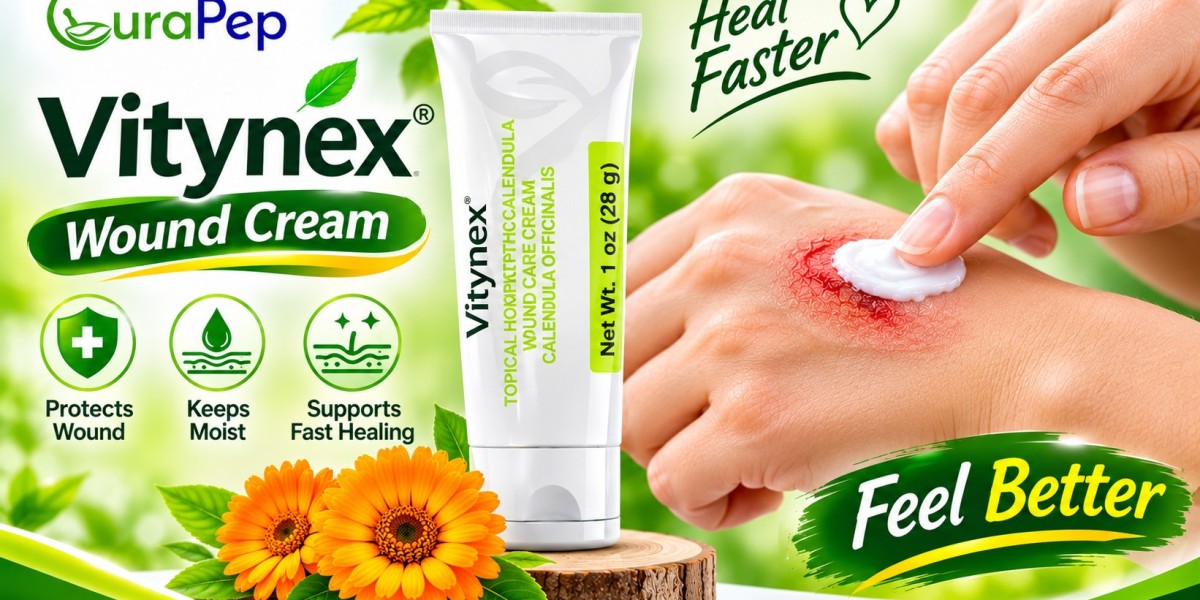
Calendula officinalis, or pot marigold, is a member of the daisy family. It appears in many soothing balms and creams. Vitynex is presented as a homeopathic, calendula based cream for wound care. Homeopathic products follow their own preparation principles and are generally considered complementary, so they should sit alongside basic wound hygiene, not replace it. If you have sensitive skin or allergies to plants such as ragweed, chamomile, or chrysanthemum, patch test first. Apply a small amount to a healthy patch of skin, wait watch for redness or itching before using it on a wound.
Cuts Practical Guidance
For a shallow cut, the aim is to bring the edges together, keep the wound clean and protect it.
Hold firm pressure for several minutes until bleeding stops.
Clean thoroughly and dry the surrounding skin.
Use a small amount of cream, then a plaster or dressing.
Change the dressing once a day or when it becomes wet.
A cut that gapes open, is longer than about 1 cm, is deep enough to see fat, or is on the face or over a joint may need closure by a professional. Cuts that need stitches are best treated within a few hours, so do not wait.
Scrapes Practical Guidance
Scrapes cover a wider area but are usually shallow. Because they expose many nerve endings, they sting more than you might expect.
Rinse for longer than you would a cut, to flush out grit.
Gently remove debris see a professional for deeply embedded material.
Apply a thin layer of cream and cover with a nonadherent dressing.
Avoid peeling off dried scabs, which tears new skin.
Children often get scrapes on their knees and elbows. A fast healing cream for open wounds is sometimes sought for these, but remember that “open” here means a minor surface graze, not a deep injury. Deep or heavily contaminated open wounds need professional care first.
Skin Tears Practical Guidance
Skin tears deserve special attention because the skin involved is fragile and the healing environment is delicate.
Control bleeding with gentle pressure, not rubbing.
Rinse with saline or clean water and pat dry very carefully.
If a skin flap is present, gently ease it back over the wound bed with a moistened, gloved fingertip or a nonstick material to seek advice from a nurse or doctor.
Avoid standard adhesive strips and tapes on thin skin, because removing them can tear the skin again.
Use a cream for skin tears only if suitable for your situation and agreed with your healthcare professional, then cover with a soft siliconebased or nonadherent dressing.
Prevention matters just as much. Keep nails short, pad furniture edges, wear long sleeves for gardening and moisturise thin skin daily.
Comparison Cuts vs Scrapes vs Skin Tears
Feature | Cut | Scrape | Skin tear |
Typical cause | Sharp object | Friction against a rough surface | Shear or friction on fragile skin |
Bleeding | Often noticeable | Light, oozing | Variable, often light to moderate |
Main risk | Depth, needing closure | Embedded dirt, infection | Flap damage, slow healing |
Cleaning focus | Control bleeding, then rinse | Thorough rinse for grit | Very gentle rinse, no scrubbing |
Dressing choice | Standard nonstick | Nonadherent, breathable | Silicone or soft nonadherent |
Usual healing time | 1 to 3 weeks | 1 to 2 weeks | 2 to 4 weeks or more |
Understanding Scarring
Scars are the natural result of repair. The body lays down collagen quickly over time it reorganises that collagen. A scar can look pink or red for months before fading. Sun exposure can darken a scar, so cover or protect the area once it has closed. You can support the process by keeping the area clean, avoiding picking gently massaging only after the wound has fully closed and with approval from your healthcare professional. If a scar becomes raised, painful, or itchy, ask a doctor about options.
Everyday Habits That Support Healing
Eat enough protein and a varied range of fruit and vegetables.
Stay hydrated.
Avoid smoking, which constricts blood vessels.
Keep blood sugar controlled if you have diabetes.
Rest the injured area where possible.
Wash hands before handling dressings.
These habits cost nothing; they influence healing as much as any product.
Choosing Between Product Types
You may see ointments, gels, creams, sprays of hydrocolloid patches on the shelf. Ointments are thicker and more occlusive. Gels feel light and cool. Creams sit between the two and are usually easy to spread on small areas. For people who like a straightforward routine, a product such as Vitynex cream is described on its product page along with how it is positioned. If you want to see the wider range and the brand, you can also visit Curapep for more.
Safety Notes
Do not use any cream on a wound that shows signs of infection without medical advice.
Do not use deep puncture wounds, animal bites, or severe burns.
Stop use if you develop a rash, swelling, or increased pain.
Keep all topical products out of the reach of children and store them as directed.
Check expiry dates and discard old tubes.
When to Seek Medical Help
Contact a doctor, nurse, or pharmacist if
Bleeding continues after 10 to 15 minutes of firm pressure.
The wound is deep, large, or gaping.
You see spreading redness, warmth, swelling, pus, or red streaks.
A fever develops.
Healing has stalled after about a week or you are unsure about tetanus protection.
The injury occurred in a person with diabetes, poor circulation, or a weak immune system.
Final Thoughts
Cuts, scrapes, skin tears are common and most heal well with simple, consistent care. Clean the wound, protect it, choose a gentle product watch for warning signs. A good skin healing cream can support that routine, but it works best alongside clean technique, sensible habits prompt help when something does not look right.
Frequently Asked Questions(FAQs)
What is the best skin healing cream for minor cuts?
There is no single best option for everyone. Choose a product made for minor wounds, check the ingredients for allergens and apply it to a clean wound. Ask a pharmacist if you are unsure.
Can I use a healing cream on a scrape every day?
Many products are used once or twice daily on clean skin as the label directs. Follow the instructions on the pack and stop if irritation appears.
Is calendula safe for skin tears?
Calendula is generally well tolerated, but skin tears involve fragile skin, so check with a nurse or doctor before applying anything. Avoid it if you have a daisy family plant allergy.
Should a scrape be covered or left open?
Most minor scrapes heal better when lightly moist and covered with a clean, nonstick dressing, because this protects the wound and supports surface healing.
How do I know if a wound is infected?
Look for increasing redness, heat, swelling, pain, pus, a bad smell, or fever. Seek medical advice promptly if you notice these.
How long should a cream be used?
Use it only as long as the wound needs care and the label allows. If there is no improvement after about a week, see a healthcare professional.
Is Vitynex a medicine?
Vitynex is described as a homeopathic, calendula based cream for wound care. Read the product page for details and talk to a pharmacist about whether it suits your needs.